Macbeth: Q&A with Creatives

This month the RNZB will present the world premiere of a brand-new production of Macbeth choreographed by the internationally acclaimed Alice Topp. Award-winning designer Jon Buswell, a long-time RNZB collaborator, will create both set and lighting, while Sydney-based Aleisa Jelbart, renowned for her costume designs across ballet, opera and theatre, will bring a bold, contemporary aesthetic to the stage. Macbeth will also feature a new contemporary music score by Christopher Gordon that includes a live string ensemble from the New Zealand Symphony Orchestra. We sat down with the creatives behind this new production of Macbeth to ask them a few questions.
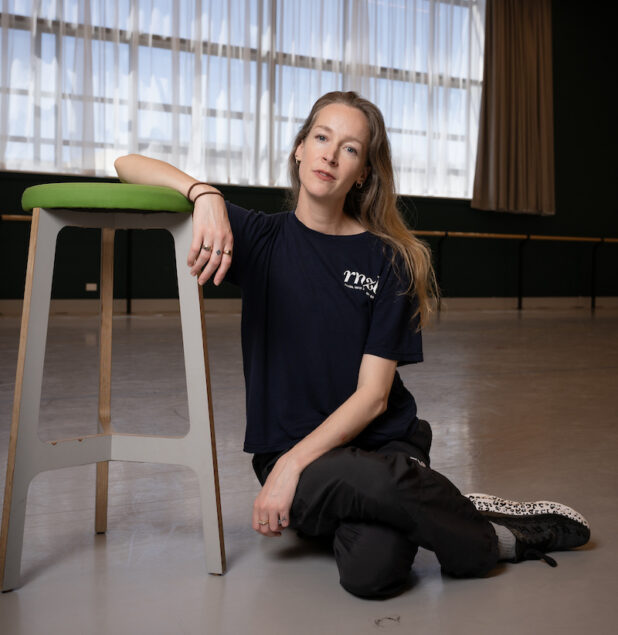
Alice Topp | Choreographer
Born and raised in Bendigo, Alice Topp began dancing at four. After two years with the RNZB, she joined The Australian Ballet as a dancer in 2007, where her choreographic voice emerged. Her first work, Trace, premiered in 2010 as part of the company’s Bodytorque showcase, followed by three further Bodytorque works between 2011 and 2014.
In 2016 she created the acclaimed Little Atlas for the mainstage. Her one-act ballet Aurum (2018), supported by a Rudolf Nureyev Prize for New Dance, premiered in the company’s Verve program and later debuted internationally at The Joyce Theater in New York. In 2018 she was appointed one of The Australian ballet’s Resident Choreographers, and in 2019 spent a month with Studio Wayne McGregor in the UK, creating a piece which formed the basis for a larger work Logos (2020).
Since retiring as a dancer, Alice has continued creating for major companies worldwide, with commissions for The Australian Ballet, Singapore Ballet, West Australian Ballet, Oldenburg Ballet and more. The RNZB has presented several of Alice’s works since 2022, this is her first full-length ballet for the company.
Photo credit: Stephen A’Court

Where did you draw inspiration from for this modern take on this Shakespeare story?
I studied Macbeth at school and have always loved the story. I’ve been fortunate enough to experience the play several times, witnessing many different takes on the story from Punchdrunk’s immersive Sleep No More in New York to a modern adaptation in Oldenburg, Germany.
The inspiration for the modern take on the old Shakespearean story started in 2020, when designer Jon Buswell and I decided to get our heads together to work on our first full length narrative ballet. I’ve always felt that Macbeth would make a brilliant ballet and that the themes in the story are timeless. The idea of modernising an old story really propels and fuels me as I see it as a great opportunity to reflect on the world we live in today and connect with people, landscape and the current climate.
Are there any movement motifs in the ballet? If so, could you please explain what they represent?
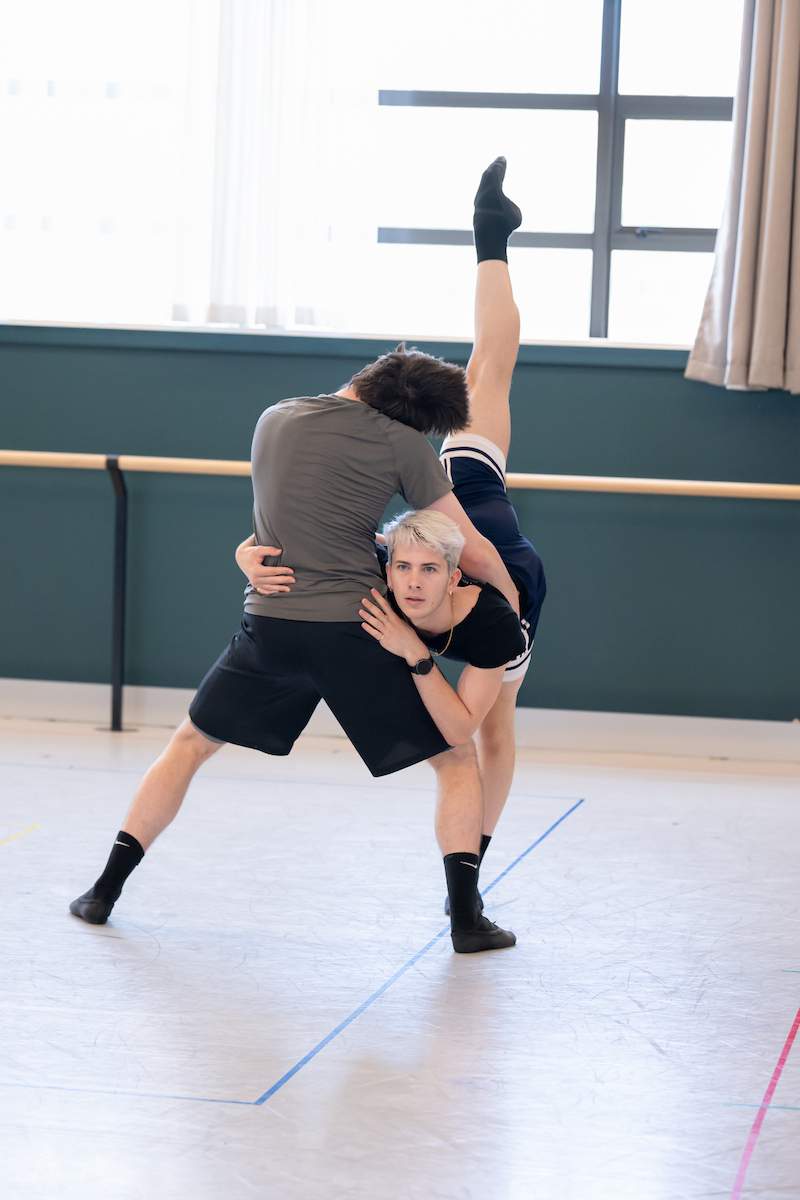
Motifs are a great way to create a recurring picture, idea, emotion and thread throughout the ballet. There are a few motifs in our story that all relate back to the original Shakespearean text. The first one is the crown hands. This is reflective of becoming King, and even though our story doesn’t have Kings and Queens, it’s a great symbol of leadership and a universal image that is associated with ruling. Our story has Macbeth becoming a political leader, so even though he never physically bears a crown, the motif reflects his power as ‘Kingpin’ or head figure.
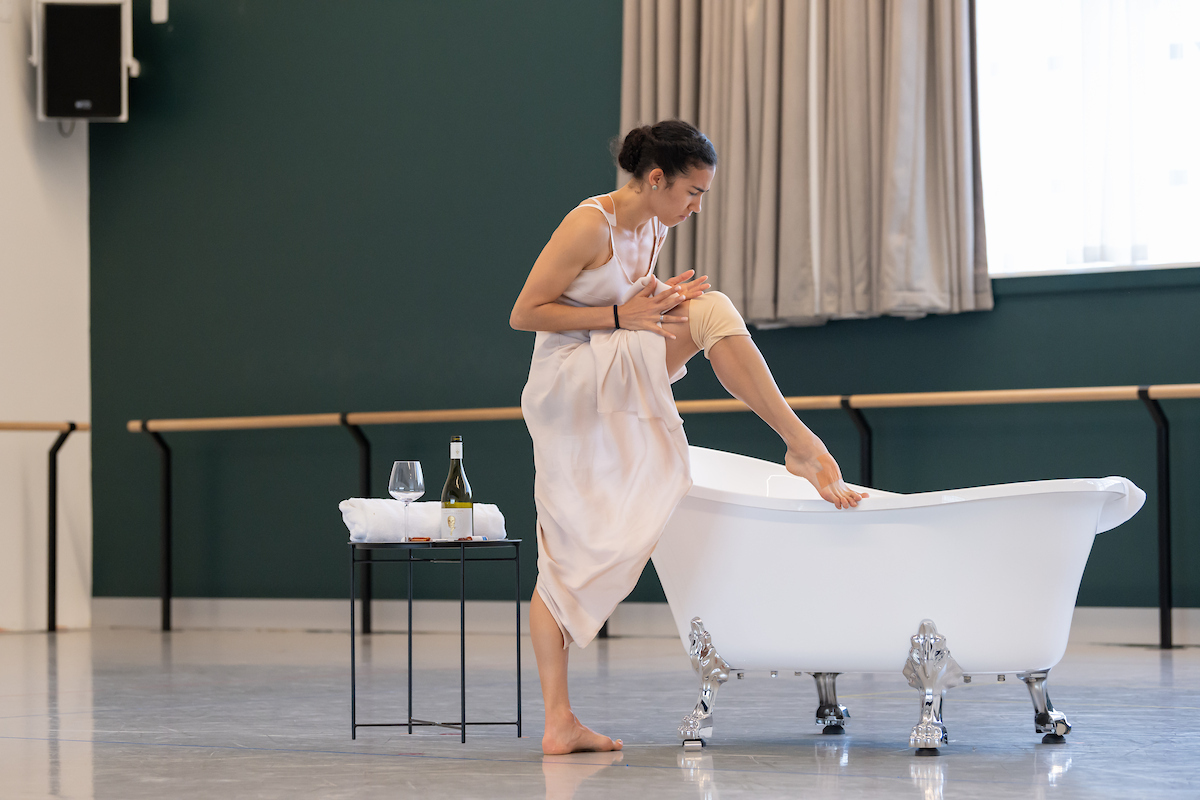
Another motif is washing the hands. This is an affectation throughout the text as Lady Macbeth struggles to unsee the blood on her hands, feverishly washing her hands repeatedly in the story. This motif is already a physical display in the text, so carrying this through into our ballet gave us a language that already exists that we could play on in different iterations.
Macbeth starts to adopt a variation of the washing which morphs into a kind of swiping affectation, as he becomes obsessed with the digital world and media as he spirals into paranoia. People are constantly watching, documenting and observing his every move and his washing and swiping becomes a compulsive behaviour.
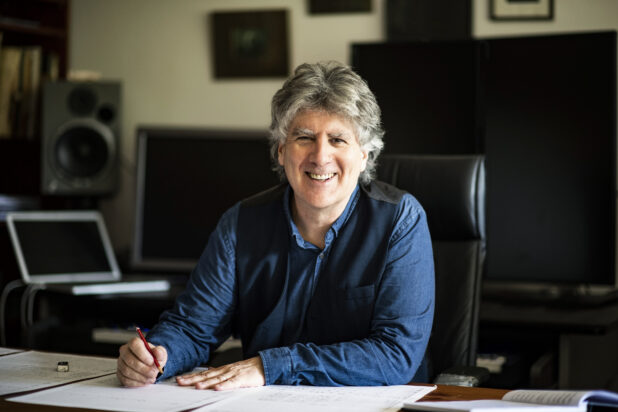
Christopher Gordon | Composer
Christopher Gordon is a Sydney-based composer whose work spans concert music, ballet/dance, film, and major events. Ballet credits include Paragon, The Happy Prince, The Hedonists, and Giselle and the Wraith Queen for companies including The Australian Ballet and West Australian Ballet. His film scores include Mao’s Last Dancer, Master and Commander, and Ladies in Black, earning international acclaim and an Emmy nomination. He has been commissioned by leading Australian ensembles and composed for major ceremonies, including the Commonwealth Games 2006.
The composition for this piece is not a traditional classical score. Tell us about the composition.
My previous three ballets have been more traditional in that there is a full orchestra in the pit playing live. With Macbeth we wanted to tap into a more progressive rock style that ended up including electronic, big band, orchestral and choral elements. 126 musicians have played on this score. While various styles of music are referenced unity is provided by the musical themes and the narrative.
The music is a combination of recorded and live music, could you explain why?
With 126 musicians and many different types of ensembles it would be impossible to fit them all in the pit and even if they did fit it would be difficult (and expensive!) to amplify them and find the perfect musical balance. Consequently, everything has been prerecorded. However, it is much more exciting for the audience and dancers to have musicians playing live, so the score has been organised to have eight string players in the pit playing alongside the recorded musicians.
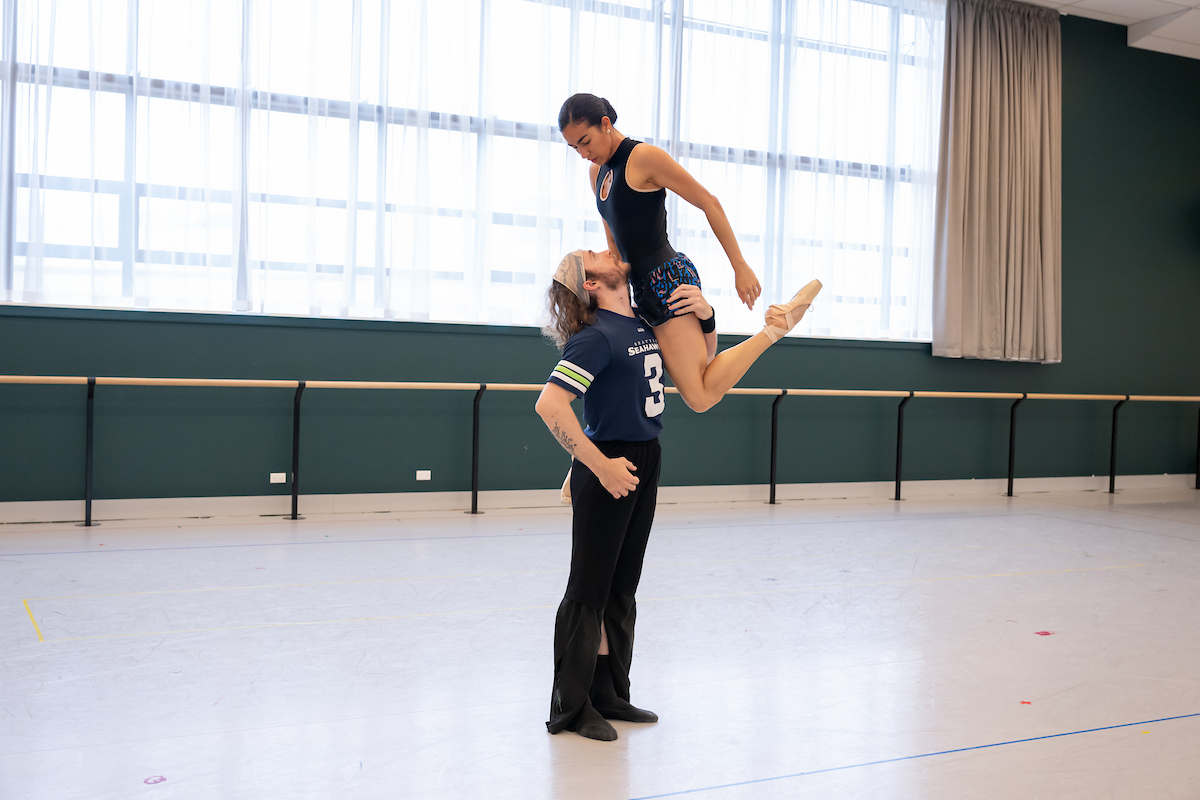
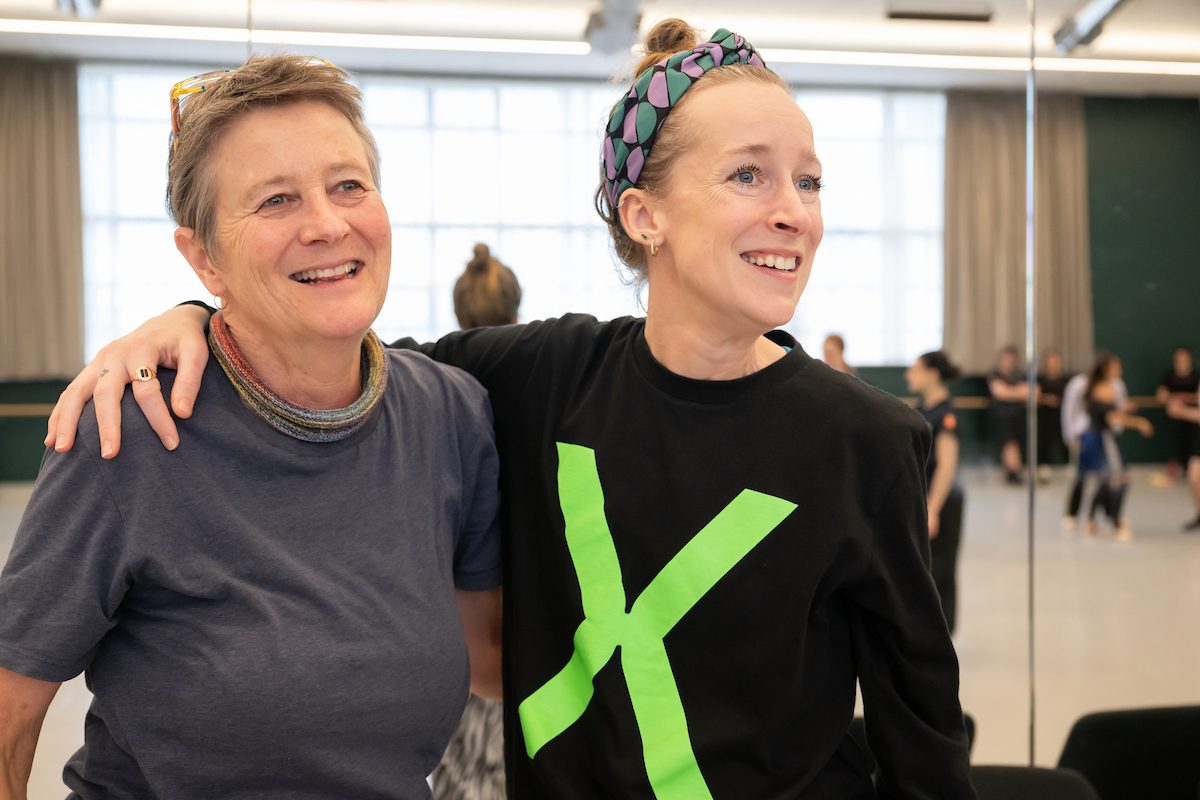
Aleisa Jelbart | Costume Designer
Aleisa Jelbart is an award-winning costume and stage designer based on Gadigal land/Sydney, specialising in movement, dance and cross-disciplinary performance. She has collaborated with Sydney Dance Company, Bangarra Dance Theatre, The Australian Ballet, Opera Australia, Bell Shakespeare, Singapore Ballet and Komische Oper Berlin. Her work has toured internationally and featured at the National Portrait Gallery, Biennale of Sydney, Gertrude Contemporary, PICA and TarraWarra Biennial. She has designed extensively for Sydney Dance Company since 2014 and is a recipient of major production design awards.
Photo credit: Stephen A’Court
Where did you draw inspiration from for the designs for this ballet?
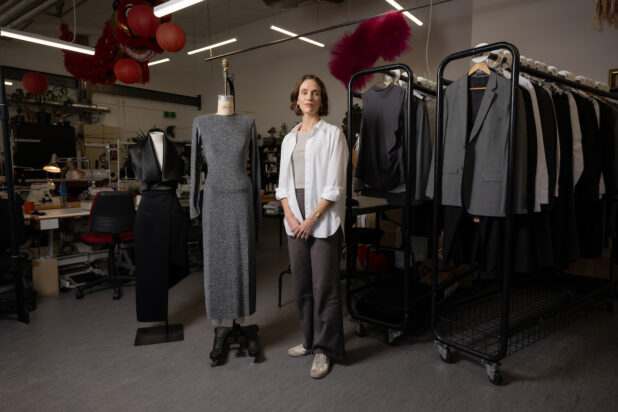
While this production of Macbeth is not set in a specific city, I drew visual references from global centres such as New York and London—places associated with political and financial influence and social status. In a world dominated by suits and corporate style, it was important to find ways to set Macbeth and Lady Macbeth apart from others and communicate who they are.
For Macbeth, I drew style inspiration from men such as Emmanuel Macron and David Beckham, who carry themselves with an effortless sophistication and confidence. At the beginning of the ballet, we see Macbeth’s confidence through the simple act of not wearing a tie in parliament, a deliberate choice to resist institutional norms in the world he is a part of.
Lady Macbeth’s costumes also convey an effortlessly chic aesthetic. She is someone who has a natural eye for style, but digging deeper, her style communicates her confidence and understanding of her own power. Inspiration came from ‘it girls’ like Carolyn Bessette-Kennedy and Gwyneth Paltrow, as well as brands such as Tom Ford and Yves Saint Laurent, all of which helped to shape the style of a character who is strong, powerful and elegant.
The witches were inspired by political influencers on social media rather than traditional supernatural figures. Their designs draw inspiration from the aesthetics of influencers and celebrities. The witches feel like a caricature of what we see online and reflect the role algorithms and influencers play in shaping trends and perception.
Can you tell us about your fabric choices.
Fabric was an important tool in shaping the atmosphere of the production. In Macbeth, materials such as metallics, satins, and velvets were used to add depth, texture, and a sense of luxury, particularly in the dinner and banquet scenes.
Every costume worn by Lady Macbeth carries a subtle lustre, allowing her to stand out within the scene. Macbeth’s banquet jacket, made from black velvet, absorbs light more heavily than other black fabrics on stage, causing him to read as darker and more isolated within a sea of black. Most importantly, all fabric choices were designed to look and feel expensive, reinforcing the world of wealth, power, and influence that defines this production.

Jon Buswell | Set and Lighting Designer
Acclaimed lighting designer Jon Buswell is internationally recognised for work across ballet, theatre, opera, large-scale events and television. He began his career with the Royal Shakespeare Company and became a freelance designer in 1997, working as both lighting and set designer.
Jon served as Technical Director at The Australian Ballet, designing major productions including David McAllister’s The Sleeping Beauty, Paragon (marking the company’s 60th anniversary), a reimagined Don Quixote, the Storytime children’s ballets, and multiple collaborations with choreographer Alice Topp. From 2008–2015, as Technical Director of West Australian Ballet, he designed lighting for most of the company’s repertoire.
For the RNZB, Jon has designed numerous productions since 2006, most recently creating sets and lighting for High Tide and To Hold, relighting Russell Kerr’s Swan Lake, revisiting his design for The Firebird, and lighting Home, Land and Sea. He recently collaborated with Alice Topp on The Butterfly Effect for West Australian Ballet.
How are different lighting states used throughout the work to create different moods, themes and feelings?
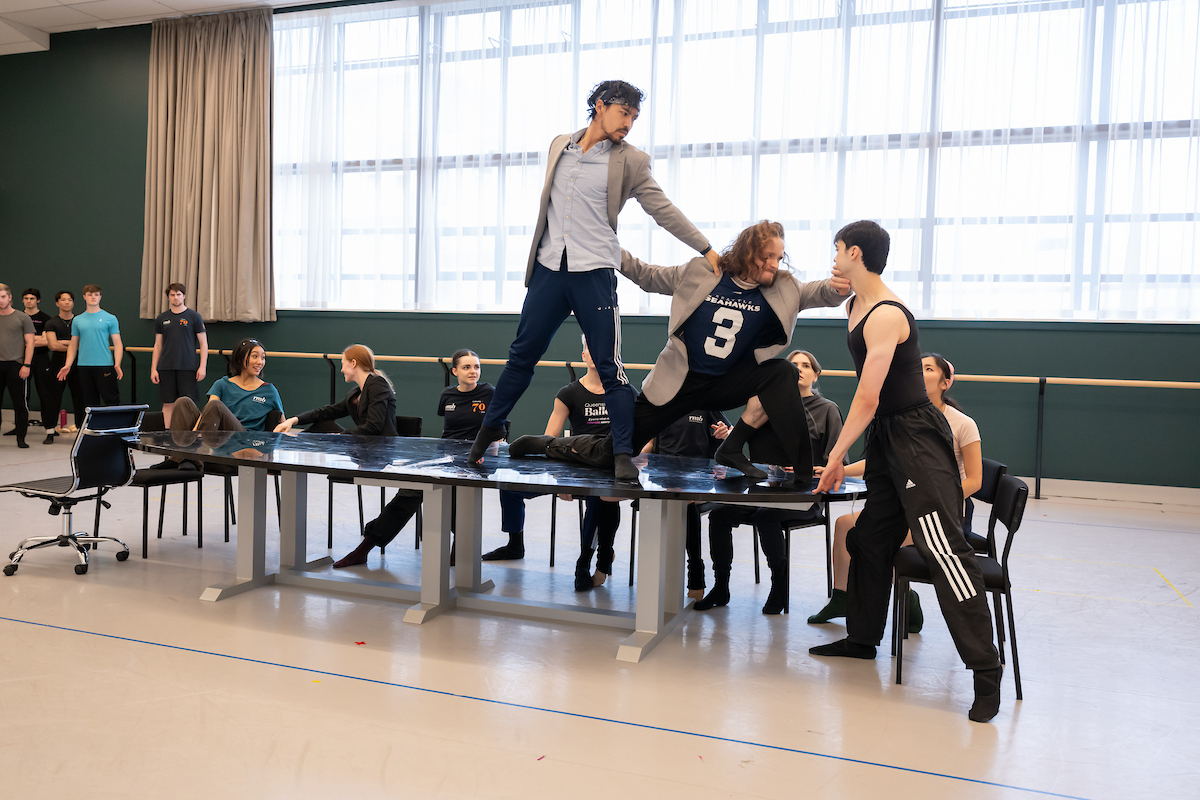
The world I have tried to create is one where it could be set at the time Macbeth was written, or it could be now. The costumes tell us that this is a modern setting. The set has heraldic motifs to nod to the original period of the play. The furniture is mainly modern but some of the pieces are older.
Lighting wise we can expect quite dramatic shafts of light from the side doors, a sterile environment for the parliament scenes and warmth and opulence for Macbeth’s house – which then turns to bleak looking lighting as his world unravels.
Are there any standout production elements that you feel are integral to portray and support the story telling?
This set isn’t ’normal’ for a ballet, it’s something more like a musical or play setting. When I designed it a few years ago now, I had the thought that Macbeth is the sort of show that wouldn’t translate well as a normally presented ballet with scene changes and traditional type scenery, so I borrowed some old memories of other Macbeths I have worked on as plays and explored that avenue to see what came up.
Alice is a wonderful collaborator as she is up for almost anything, so it’s been really fun to keep visiting and revisiting the story and figure out how to present it in this environment. I think it should have a strong impact on audiences.